What Is Branding? A Simple Guide for New Businesses and Creators
Learn what branding actually means and how to choose your starting direction as a new business or creator. Read the guide or skip straight to the quiz for quick, practical clarity.
Writing note: I am dyslexic. You may notice occasional language or grammar mistakes. My aim is to create content that is helpful, relatable, and easy to read.
Plain reading is on by default. Turn on hints only if you want short definitions for a few technical terms.
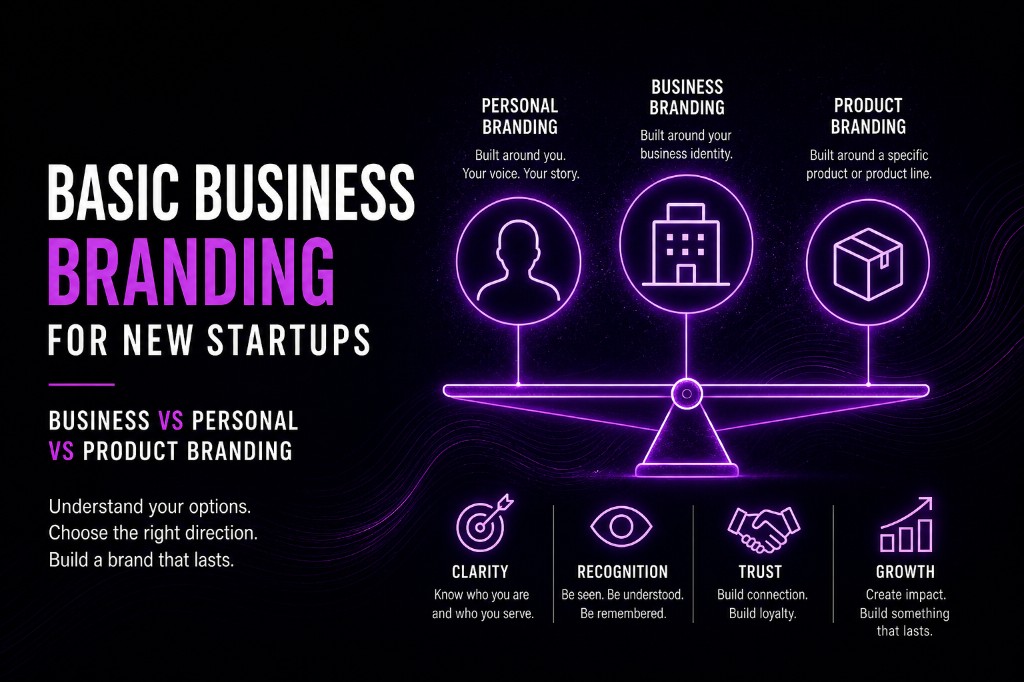
In this guide, I will walk you through the first steps to help you decide where to start, so you can get things moving. If you pivot or change direction later, that is completely fine.
Branding is how people understand you before they ever speak to you. It is not just a logo. It is the impression your business leaves across everything. Your website, your content, your tone, and how clearly people understand what you offer.
If you are starting for the first time, it can feel like you need to figure all of this out at once.
You don’t.
You need to make a few fundamental decisions to give yourself a strong starting point and a direction, and the rest will fall into place. Getting off the starting line is the most important step.
You don’t need a degree in Marketing or Advertising to create a strong and successful brand image or online presence.
A lot of the things you need to achieve a brand will already be ingrained into your product or service. Personal branding is at the forefront of modern marketing, but it is not the only way to position what you offer.
There are a few clear directions you can take, and choosing the right one early makes everything else easier.
Short on time? Jump straight to the quiz.
Business Vs Personal Vs Product Branding
Personal Branding
In today’s social media-driven world, personal branding has become one of the most common ways new founders and small businesses market themselves.
It is built around you. Your voice, your face, your perspective, and how you show up consistently over time.
Brands like P. Louise Cosmetics, led by Paige Williams, or Reggae Reggae Sauce, created by Levi Roots, are strong examples of founders building visibility through personality and story.
People connect with people. That is what makes this approach powerful.
That said, it does not come naturally to everyone.
For me, confidence and communication have been a challenge, especially with dyslexia. Showing up publicly and putting content out there hasn’t always felt easy.
But that does not mean it is not possible.
Business Branding
Business branding is when your marketing is built around the company as a whole, rather than a single product or person.
Brands like Nike or Adidas are strong examples. The brand is not tied to one product. It is the identity people recognize, trust, and return to.
A strong business brand can survive, grow, and maintain its voice over time, regardless of who is running things behind the scenes.
If you are building something you want to outlive you, or something you can step away from while it continues to run and generate income, business branding is a strong choice.
Product Branding
Product branding focuses on a specific product or a group of closely related products rather than the business as a whole.
The product becomes the main thing people recognize and remember.
A strong example of this is Hoover. In the UK, the brand became so dominant that the name is now commonly used as a verb, with people saying “to hoover the carpet” regardless of what brand of vacuum cleaner they are actually using.
That is the power of strong product branding. The product itself stops being just a product and becomes part of everyday language and identity.
Quick positioning check
Interactive Section
Brand Direction Quiz
A quick, structured check to help you choose a clear direction without overthinking.
Step 1 of 7
- Offer
- Positioning
- Visibility
- Priority
- Audience
- Capacity
- Clarity
If you want help setting up the workflow behind your brand direction, read Starting Something New: Build a Simple Workflow Foundation.
When you are ready to pick the actual tools that keep that work organised, Build a Simple Productivity App Stack for Remote Work keeps it simple and low-cost.
You can also browse every published guide on the TechNomad blog.
Feedback
Comments & usefulness
No account needed. Rate how useful this guide was and leave a comment, question, or note. Comments are public and stored for everyone reading this guide.
Comments
No comments yet. Be the first to leave a rating and note.